If you want to explore Indonesia beyond Bali, a Jakarta Java Bali Lombok itinerary is a perfect starting point. In around twenty days, you go from a dense, vibrant capital to cultural cities, spectacular volcanoes, terraced rice fields, and islands with fine sand.
The idea behind this trip is to keep a reasonable pace: a few nights at each key stop, travel mainly by train on Java, then the gentler side of Bali and the wilder side of Lombok to finish, with some real highlights… and a few limitations to be aware of. All the personal impressions below come directly from my own trip.
Stop 1: Jakarta, the gateway to Indonesia
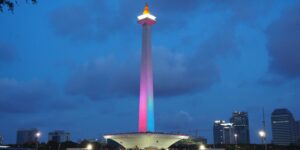
For many travelers, Jakarta is mainly an arrival point. In my experience, there isn’t a huge amount to do there: two days is more than enough to get a feel for it without lingering.
Kota Tua, the old colonial district, is the best place to start. Around Fatahillah Square, the white buildings recall the Batavia era. You’ll find museums, cafés, and lively cobbled lanes. In just a few hours, you can alternate between history, architecture, and street food.
The contrast with the modern districts is striking. Skyscrapers, huge malls, food courts, mosques, and heavy traffic give a real picture of the Indonesian megacity. A short stop here helps you acclimatize, try staple dishes like nasi goreng or mie goreng, and get into the country’s rhythm.
Then it’s on to Yogyakarta by train, for the rest of the Jakarta Java Bali Lombok itinerary. The journey crosses rice fields and small towns, and lets you ease into Java’s pace.
Stop 2: Yogyakarta, Borobudur and Prambanan
Yogyakarta, or Jogja, is Java’s cultural capital. You’ll find a rare mix of tradition, student life, and creativity.
The Kraton, the sultan’s palace, sits at the heart of the historic city. Courtyards, pavilions, gamelan music, costumes, and royal objects trace the kingdom’s history. Right next door, Taman Sari, a former water garden, offers pools, vaulted passageways, and very photogenic alleys.
Malioboro Street is the city’s other main stage. Batik shops, horse-drawn carriages, food stalls, street music, and bright signs make it a classic for evenings in Jogja. If you head a little farther out, you’ll discover cafés, galleries, street art, and a very present creative youth scene.
From Yogyakarta, two day trips are must-dos in any Jakarta Java Bali Lombok itinerary.
In my experience:
-
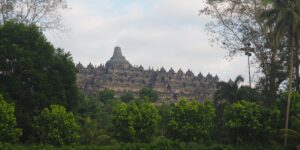
Borobudur, Indonesia’s largest Buddhist temple, is magical at sunrise. I found the moment beautiful, but it depends a lot on the weather: you need to be lucky enough to have few clouds to fully enjoy the light and the view of the volcanoes.
-
Prambanan, a majestic Hindu complex, is especially beautiful at sunset, with its tall carved towers silhouetted against the sky.
Stop 3: Malang, a cool-climate town and base for East Java
Continuing east, Malang is a transition between Central Java’s great temples and the volcanoes. The climate is cooler, and the town is gentler than Jakarta.
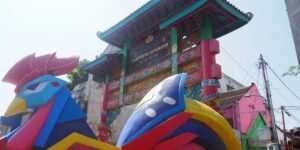
You’ll discover colorful neighborhoods like Jodipan, where houses are painted in bright shades and decorated with murals. Markets, modern cafés, and warungs let you experience real Javanese life, while getting a bit of rest before the treks.
Malang is mainly a practical base to organize what’s next: Bromo, Ijen, and possibly Tumpak Sewu Waterfall. You can go through a local agency, a driver, or a mix of public transport plus a guide.
Stop 4: Mount Bromo, sunrise over the Sea of Sand
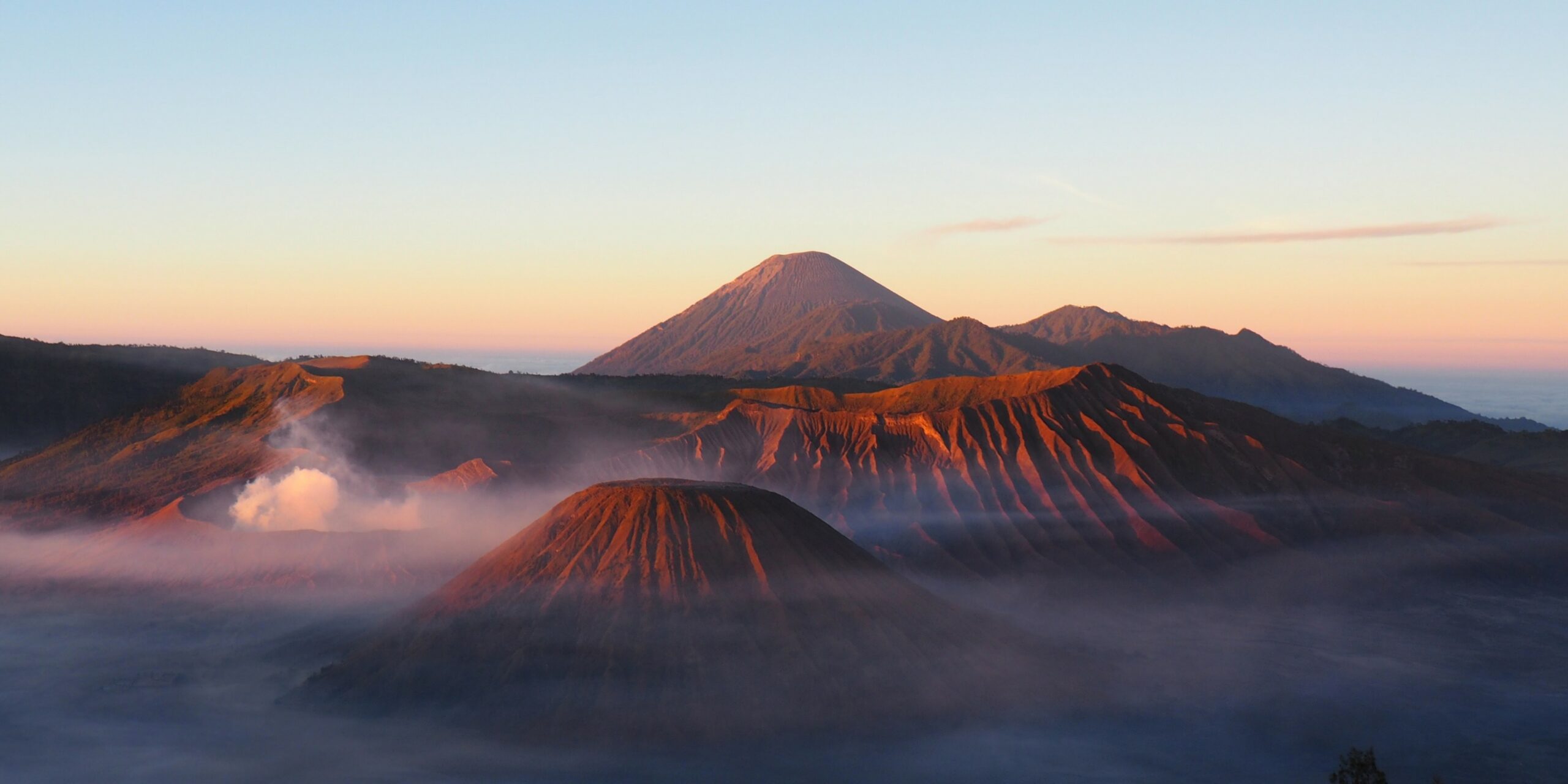
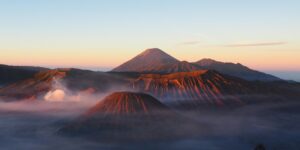
Mount Bromo is one of the country’s most iconic volcanoes. In the middle of a huge caldera, a gray sea of sand surrounds several volcanic cones, including Bromo’s smoking crater.
Most travelers follow the same plan: a night in a village (often Cemoro Lawang), a wake-up in the middle of the night, a 4×4 ride up to a viewpoint, then sunrise over a sea of clouds and the volcano silhouettes. In my experience, the atmosphere at Bromo is truly stunning, with intense colors at dawn: oranges, pinks, mist clinging to the ridges, and light on Semeru in the background. It’s clearly one of the most beautiful scenes of the whole trip.
Then the vehicles descend into the Sea of Sand. You cross this ash desert on foot, on horseback, or by 4×4 to the foot of Bromo, before climbing up to the crater rim. And here, I think it’s important to say it: the climb up to the volcano is quite dangerous. In my view, safety isn’t great, barriers are sometimes minimal, and the crowds can make some sections slippery. Nothing impossible, but you really need to stay alert, especially at the crater edge.
Stop 5: Kawah Ijen, a turquoise acidic lake and blue fire
Farther east, Kawah Ijen offers a completely different landscape. A huge crater holds an intensely turquoise-blue acidic lake. At night, when conditions allow, you can catch a glimpse of the famous blue fire—blue flames caused by sulfurous gases.
On paper, doing Bromo and Ijen back-to-back is common. In the reality of my trip, it was quite difficult. Waking up at night for Bromo, chaining the transfers, then heading out again in the middle of the night for Ijen and descending into the crater is really demanding. In my experience, waking up at night to go down into the crater to see the blue flames right after Bromo is tough, especially when fatigue starts to set in.
On the other hand, at sunrise, the view from the crater rim is exceptional. The turquoise lake, yellow walls, fumaroles, and the silhouettes of the surrounding volcanoes: in my view, it’s a panorama that more than makes up for the difficult climb and the accumulated fatigue.
A mask or scarf, warm clothes, and good shoes are essential. Once again, I really recommend taking this stop seriously and adjusting your pace if you feel the back-to-back schedule is too intense for you.
After Ijen, it’s time to leave Java for Bali, usually via the ferry crossing from the west of the island.

Stop 6: Bali, between Ubud, temples and water palaces, and Tanah Lot
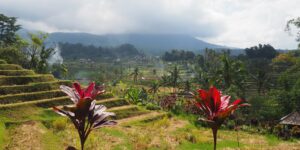
After the volcanoes, the gentleness of Bali feels like a real break. Temples, offerings, the scent of incense, terraced rice fields, and villages bring this part of the itinerary to life.
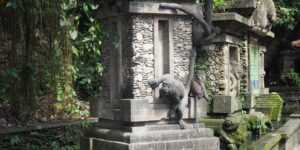
Ubud is an ideal base. You can walk through the rice fields, do the Campuhan Ridge Walk, visit the Monkey Forest, watch traditional dance shows, get lost in the markets, and try countless cafés and warungs. In my experience, the vibe in Ubud is really great—both lively and relaxed—and the food is extremely good.
It’s also where I realized just how easy it is to eat vegetarian or vegan in Indonesia. If there’s one country where you could become vegan if you aren’t already, it’s Indonesia: dishes based on tofu, tempeh, vegetables, fruit, fresh juices, meat-free options everywhere… the food fits that lifestyle very easily.
From Ubud and the center of the island, you can take day trips to Tampaksiring, its sacred springs and rock-cut temples, as well as to several waterfalls.
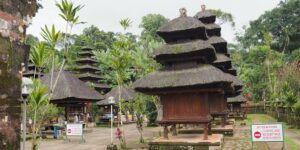
To round out your Jakarta Java Bali Lombok itinerary, a loop of temples and water palaces works really well. Pura Luhur Batukau, a jungle temple on the slopes of Mount Batukaru; Pura Taman Ayun, a former royal temple surrounded by moats in Mengwi; and Tirta Gangga, the water palace of Karangasem with its pools, statues, and koi fish.
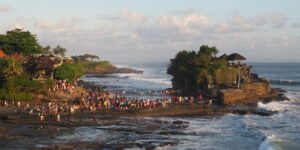
And above all, don’t forget Tanah Lot, a temple perched on a rock battered by the waves, stunning at sunset. In my experience, Tanah Lot isn’t just a postcard: it’s a temple and a place with a real soul, a special atmosphere as the sun goes down, the waves crash against the cliffs, and the sanctuary’s silhouette stands out in the golden light.
Stop 7: Gili Air, Gili Trawangan and Lombok—beaches, snorkeling, and mountains
The last part of this Jakarta Java Bali Lombok itinerary is all about turquoise seas and Lombok’s rugged landscapes.
From eastern Bali, fast boats make it easy to reach the Gilis.
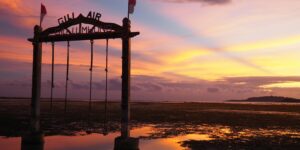
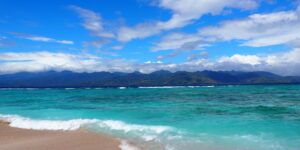
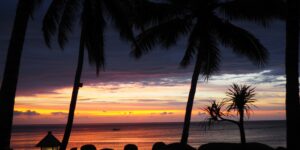
Gili Air, quieter, is perfect for snorkeling with turtles right near the beach. Gili Trawangan, more lively, combines beach bars, diving, and spectacular sunsets.
In my experience, the Gili Islands are so enjoyable that I really regretted not staying longer. The slow pace, no cars, bike rides, evenings with your feet in the sand… it’s exactly the kind of place where a few extra days would have been welcome.
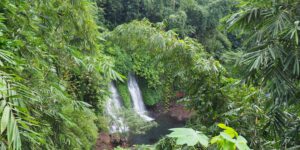
Then it’s on to Lombok. Senggigi offers a long string of palm-lined bays and a calm vibe, ideal for a few evenings watching the sun go down. Farther north, Senaru, a mountain village on the slopes of Rinjani, lets you discover highland rice fields, forest, and above all the Sendang Gile and Tiu Kelep waterfalls, surrounded by dense vegetation.
Lombok ends this trip on a wilder note. Less developed than Bali, the island offers a different atmosphere while still being accessible and varied. For me, I clearly didn’t have enough time to go deeper inland. I felt like I only scratched the surface, and I would have liked several more days to explore the center, the villages, and more secluded beaches.
How much time should you plan for this itinerary?
To avoid rushing, the ideal length for a Jakarta Java Bali Lombok itinerary is about three weeks. One to two nights in Jakarta (no need to plan more—in my experience you quickly run out of things to do), three or four in Yogyakarta, two or three in Malang and for the Bromo + Ijen combo, then five to seven nights in Bali between Ubud and the temples, and finally four to six nights for the Gilis and Lombok.
With a bit less time, you can shorten one or two stops. For example, spend just one night in Jakarta, focus Yogyakarta into two days, and cut down the East Java section if you feel the back-to-back night treks (Bromo then Ijen) would be too much.
Overall, it’s flexible, and each block could become a trip in its own right. This itinerary still links the big classics into one smooth route—from the streets of Jakarta to Lombok’s waterfalls—plus my concrete feedback on what’s really worth it, what’s more intense than expected, and the places where, clearly, I would have liked to stay longer.