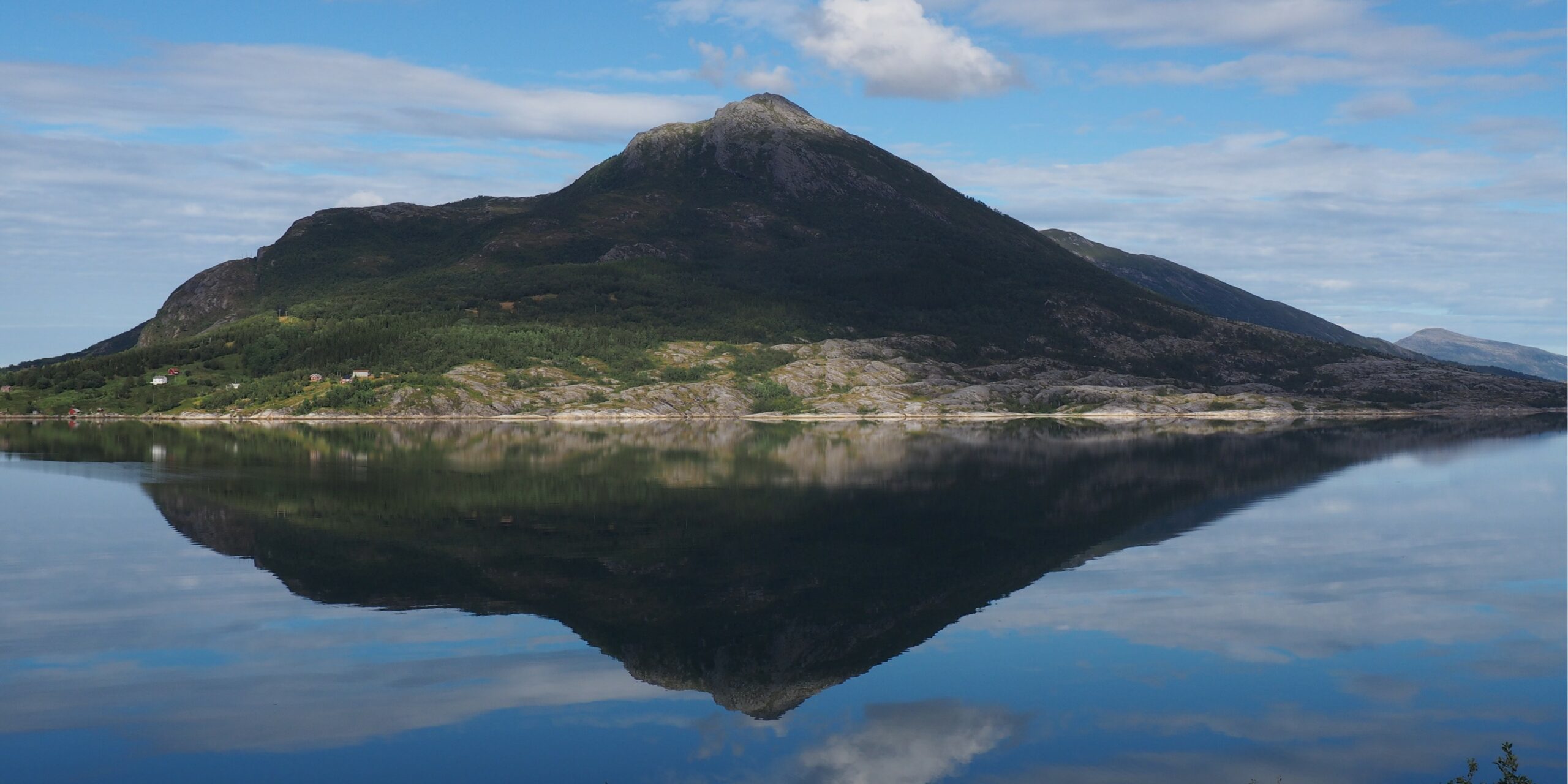
Norway is a country of contrasts and light. From the dense forests of the south to the icy cliffs of Nordkapp, it unfolds a world of raw nature and silent beauty. This journey from south to north offers an immersion into the very essence of Scandinavia: deep fjords, winding roads, medieval churches, and villages suspended between sea and mountain. Here is a complete itinerary, from the heart of Oslo to the edges of the Arctic.
Step 1: Oslo, the capital between nature and design
An ideal starting point, Oslo embodies the perfect balance between modernity and Nordic calm. Bordered by the waters of the fjord and green hills, the capital is best explored on foot. The Bjørvika district symbolizes 21st-century Norway: the Opera House, all marble and glass, seems to float on the water; right next door, the Munch Museum houses the works of the country’s most famous painter.
A little further on, Vigeland Park displays over 200 monumental sculptures, celebrating the strength and fragility of life. Locals come here for walks after work, a reminder of how much nature is part of daily life. Before leaving, stroll through the Aker Brygge district, with its waterfront cafes and terraces enlivened by long summer evenings.
🧭 Tip: plan for two days in Oslo to visit museums, parks, and the waterfront before heading west.

Step 2: Heddal and medieval traditions
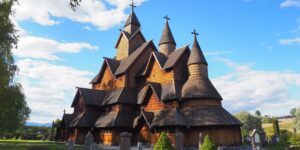
On the road to Telemark, the village of Heddal is home to Norway’s largest stave church. Built in the 13th century, this structure impresses with its complex architecture, interlocking roofs, and scent of pine. It bears witness to Scandinavian craftsmanship and the fusion of Viking heritage and Christianity.
Inside, ancient paintings and carvings tell eight centuries of history. The place exudes a mystical atmosphere, somewhere between spirituality and Nordic legend.
🌲 Tip: visit Heddal in the morning to enjoy the golden light on the wood and the serenity of the site.
Step 3: Rogaland and Preikestolen, a balcony over the fjord
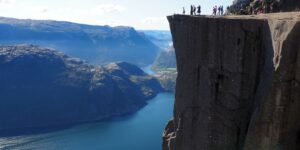
Before reaching the western fjords, the Rogaland region is worth a detour. This is where you’ll find one of Norway’s most iconic panoramas: Preikestolen, or “Pulpit Rock.”
This granite cliff, perched 604 meters above the Lysefjord, offers a dizzying view of the turquoise waters below. The hike to reach it takes about two hours and alternates between forests, streams, and rocky slabs. At the summit, silence reigns, disturbed only by the wind and the cry of seagulls.
🧗 Tip: leave early in the morning to avoid the crowds and enjoy the sunrise over the fjord — a breathtaking sight.
Step 4: Vestland and the magic of Bergen
Continuing west, you reach the Vestland region, the heart of the Norwegian fjords. The city of Bergen, an old Hanseatic town, is a colorful jewel nestled between mountains and sea. Its historic district, Bryggen, a UNESCO World Heritage site, features rows of wooden houses painted in red, yellow, and ochre, remnants of medieval trade.
Bergen is also the gateway to the country’s most beautiful fjords: the Hardangerfjord, dotted with orchards and waterfalls, and the Sognefjord, the longest and deepest in Europe. Cruises and ferries allow you to admire the majestic cliffs and small villages lining their shores.
🌧️ Tip: Bergen is famous for its frequent rain — bring a waterproof jacket and let yourself be charmed by the unique atmosphere of the damp cobblestone streets.
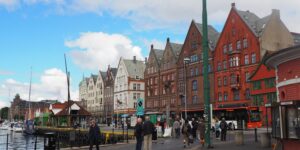
Step 5: Geirangerfjord, the most spectacular of the fjords
Head north to the Geirangerfjord, a UNESCO World Heritage site. It is one of Norway’s most photographed natural sites. Vertical walls plunge directly into the deep waters, while legendary waterfalls like the “Seven Sisters” cascade down the mountain.
The scenic road leading to the Dalsnibba viewpoint offers a stunning panorama, especially at sunset. The place feels timeless, halfway between sea and sky.
🚗 Tip: avoid the large cruise ships by opting for local shuttles or kayaking for a more authentic experience.
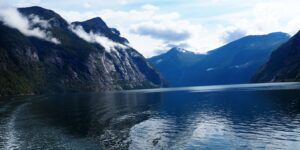
Step 6: Trollstigen, the Trolls’ Path
Near Geiranger, the Trollstigen road (“the Trolls’ Ladder”) is a masterpiece of engineering and daring. Eleven hairpin turns follow one another over a dizzying incline, offering spectacular views of the Isterdalen valley. Suspended viewpoints allow you to photograph this legendary road from every angle.
Local legends say that trolls themselves carved these mountains. Traveling along the Trollstigen, you understand why Norway is often described as a country born of mythology.
🧭 Tip: drive the route on a clear day, as visibility is essential on this winding path.
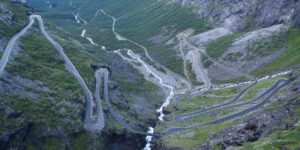
Step 7: Jotunheimen, the home of the giants
In the heart of the country, Jotunheimen National Park (“the home of the giants”) offers some of the most beautiful hiking terrain in Scandinavia. This is where Norway’s highest peaks are found, including Galdhøpiggen.
Trails wind between glaciers, turquoise lakes, and snowy plateaus. The famous Besseggen ridge is a must-see, offering a 360° panorama over lakes Gjende and Bessvatnet.
🥾 Tip: leave early and bring a snack; the hike takes between 6 and 8 hours depending on your pace.
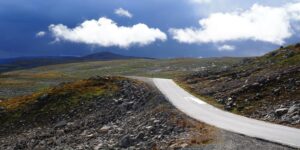
Step 8: Trondheim, the city in the colors of the past
Continuing north, Trondheim charms with its historical appeal and peaceful atmosphere. The former royal capital, it houses Nidaros Cathedral, a Gothic jewel and major pilgrimage site.
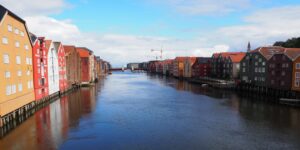
The quays of the Bakklandet district offer a romantic stroll, lined with colorful houses on stilts. In the evening, the sun’s reflections on the Nidelva River transform the city into an impressionist canvas.
🏰 Tip: climb up to Kristiansten Fortress to admire the city from above and enjoy a panorama of the fjord.
Step 9: Helgeland and Nordland, the secret fjords
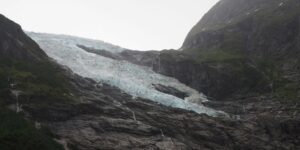
Further north, the Helgeland and Nordland regions reveal a wilder and more confidential Norway. The Svartisen glacier, a huge tongue of ice descending to the sea, fascinates with its bluish reflections. Along the Kystriksveien coastal road, the fishing villages of Rødøy, Nesna, or Glomfjord offer peaceful stops between two ferries.
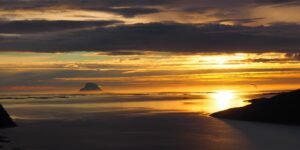
The sunsets there are of striking beauty, and the evening light caresses the cliffs like a watercolor.
🌅 Tip: the road between Bodø and Sandnessjøen is one of the most spectacular — every turn reveals a new fjord.
Step 10: The Lofoten Islands, jewels of the Far North
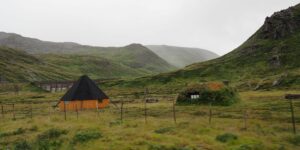
The Lofoten Islands are a world apart. Sharp mountains, white sand beaches, and red cabins perched on stilts create a dreamlike setting. Here, the light never sleeps in summer, and the northern lights dance in winter.
The villages of Reine and Hamnøy offer breathtaking panoramas. Hikes like Reinebringen or Kvalvika Beach are among the most beautiful in Norway.
📸 Tip: stay in a “rorbu,” a former fisherman’s cabin, to experience Norway in all its authenticity.
Step 11: Nordkapp, the end of the world
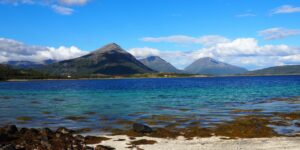
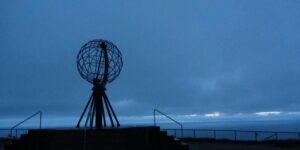
The final stage, Nordkapp marks the end of the journey and the beginning of the Arctic. Perched 300 meters above the sea, this rocky cape is the northernmost point of Europe. The wind blows with force, the sea is omnipresent, and the silence is absolute.
In summer, the midnight sun lights up the horizon without ever setting; in winter, the polar night and the northern lights transform the sky into a magical show. It’s a unique emotion, that of touching the limits of the inhabited world.
🔥 Tip: bring warm clothes year-round; the Arctic wind remains freezing even in the middle of July.
Conclusion
From Oslo to Nordkapp, Norway reveals itself like a long poem of stone, water, and light. This journey from south to north crosses all forms of the world: city and forest, sea and ice, tradition and modernity. You learn to slow down, to contemplate, to listen to the silence. It’s an itinerary that isn’t just visited: it’s lived, deeply, intensely, between sky and earth.